
UNDERSTANDING FOUNDATION MOVEMENT
Causes of Foundation Problems in East Texas
Foundation movement can result from changing soil moisture, drainage, plumbing leaks, erosion, fill settlement, vegetation, construction conditions, or a combination of factors. Understanding the likely cause comes before selecting a repair.
Expansive clay and changing moisture levels
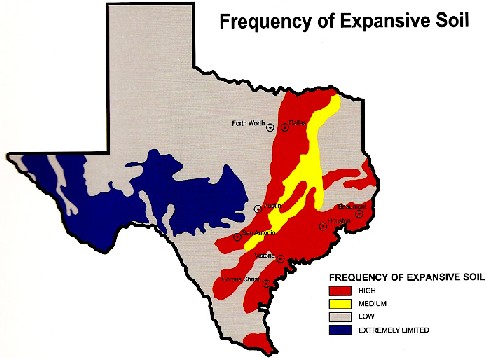
Clay-rich soils can change volume as their moisture content changes. Soil may expand during wetter periods and contract as it dries. When moisture is uneven around a house, different parts of the foundation may be supported differently.
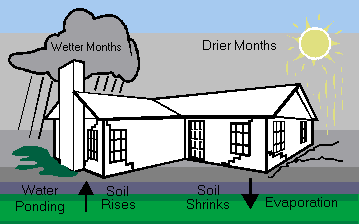
Seasonal movement does not affect every house in the same way. Soil type, drainage, tree cover, foundation design, plumbing, and previous site preparation all influence how a structure responds.
Drainage and concentrated water
Roof runoff, negative grading, standing water, failed drains, or discharge concentrated near one part of the house can create uneven moisture conditions or contribute to erosion. Drainage should be evaluated as part of the overall foundation picture.
When water management is the primary concern, learn about our foundation drainage solutions.
Plumbing leaks and uncompacted fill
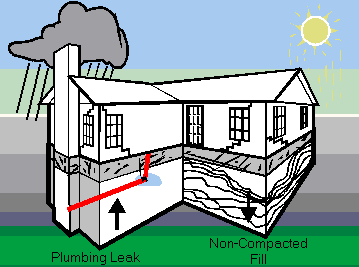
A leak beneath or near a foundation can alter soil moisture and may wash or soften supporting material. Separately, fill that was not properly compacted during construction can settle over time. Either condition can contribute to movement, and they require different corrective decisions.
Other conditions that may contribute
Trees and vegetation
Large trees and dense vegetation can influence moisture demand near a structure. Root activity, soil type, distance from the house, and seasonal weather all matter.
Erosion and loss of support
Runoff, failed drainage, washout, or disturbed soils can remove or weaken supporting material near parts of a foundation.
Site preparation and construction conditions
Poorly compacted fill, inconsistent soil preparation, inadequate drainage planning, construction defects, or later alterations may affect foundation performance.
Drought and prolonged heat
Extended dry periods can reduce moisture in clay soils. The effect may be more pronounced where sunlight, landscaping, irrigation, and tree cover create different conditions around the structure.
Symptoms are evidence to investigate—not an automatic repair diagnosis
Cracks, sticking doors, uneven floors, and separations should be considered together with measurements and property conditions. If structural repair is not justified, Accu Pier will tell you.
Financing options available — Learn more
 Accu Pier Foundation Repair